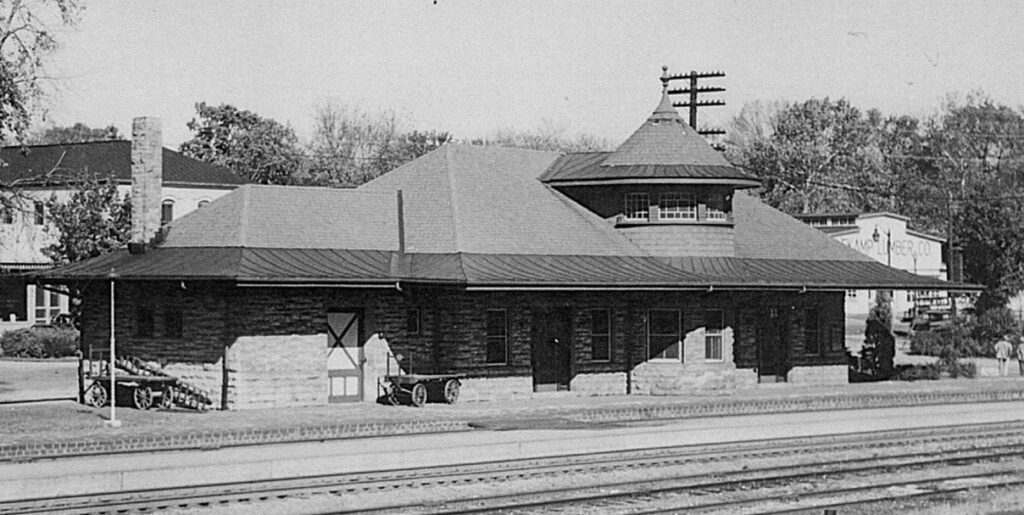

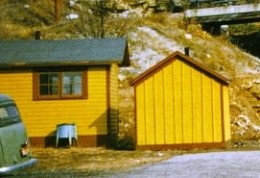
In 1910 the standard colors used by the Missouri Pacific Railway on their stations were called ‘Bright Yellow with Bronze Green’ trim. This color combination was used on all right-of-way structures (depots, tool houses, section houses, privies, gatehouses, etc.). Those structures found in the railroad’s terminals (roundhouses, sand houses, storage buildings, car repair sheds, etc) were painted Red with Bronze Green trim. As of the date of this article it is not known if the St. Louis, Iron Mountain & Southern used the same colors but both roads were merged in 1918 to the Missouri Pacific Railroad so one may assume buildings on the old Iron Mountain right of way could have received these colors between 1918 and 1925.
Frame Buildings
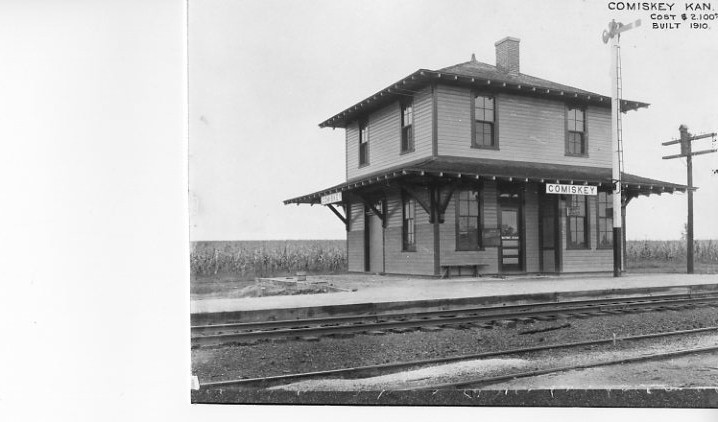
1926 Painting Standards for buildings
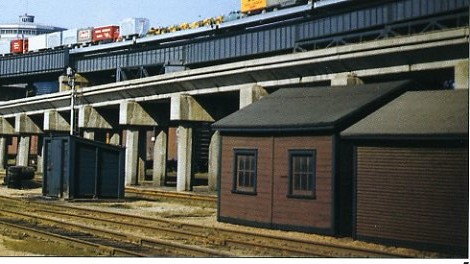
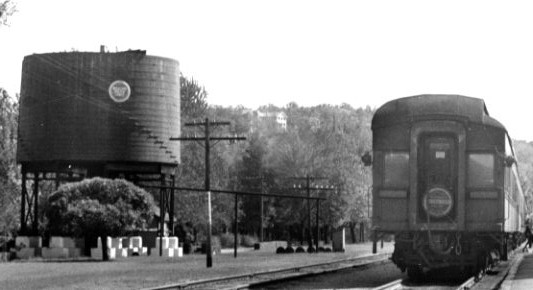
When the Missouri Pacific purchased the Texas Lines in 1926 they found themselves with several different paint standards due to the various railroads acquired. As a result, the Mopac Standards Committee painted several model depots in the colors of the various railroads and voted on which standard would be retained. The colors of the International-Great Northern, Colonial Yellow with brown trim, won the committee’s vote and the new colors started to be used first on the Mopac’s Eastern Division between St. Louis and Kansas City. One station the author saw remained in the Colonial yellow and brown trim into the 1980’s and this was the Mopac station at Laredo, Texas. The terminal buildings retained their red base color and bronze green trim. Water tanks, placed on the right of way or in terminals were red. A few photos illustrate where the railroad painted a large MP ‘buzz saw’ logo on the side of the tanks for advertising.
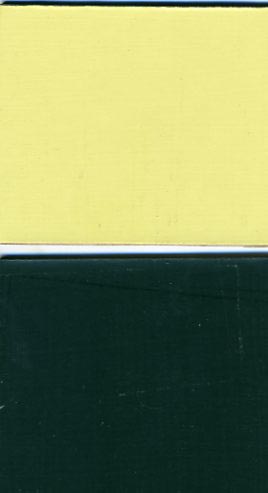
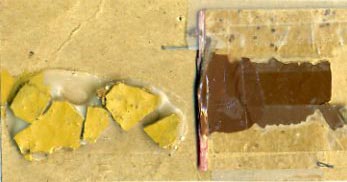
Colonial Yellow and Brown; these paint chips were removed from the interior of the freight house on the MP station at Beloit, Kansas by the author in 1975. They had not been exposed to the sunlight or weather. Sherwin Williams “Butternut” 6389 is a very close color to Colonial Yellow.
Structures were painted by the railroad’s own ‘Bridge and Building’ gangs. Dry pigments were mixed with linseed oils and applied by brush. The standards for interior colors at this time are not available. Some examples, such as Bergman, Arkansas had the interior painted in the same colors as the exterior (yellow and brown).
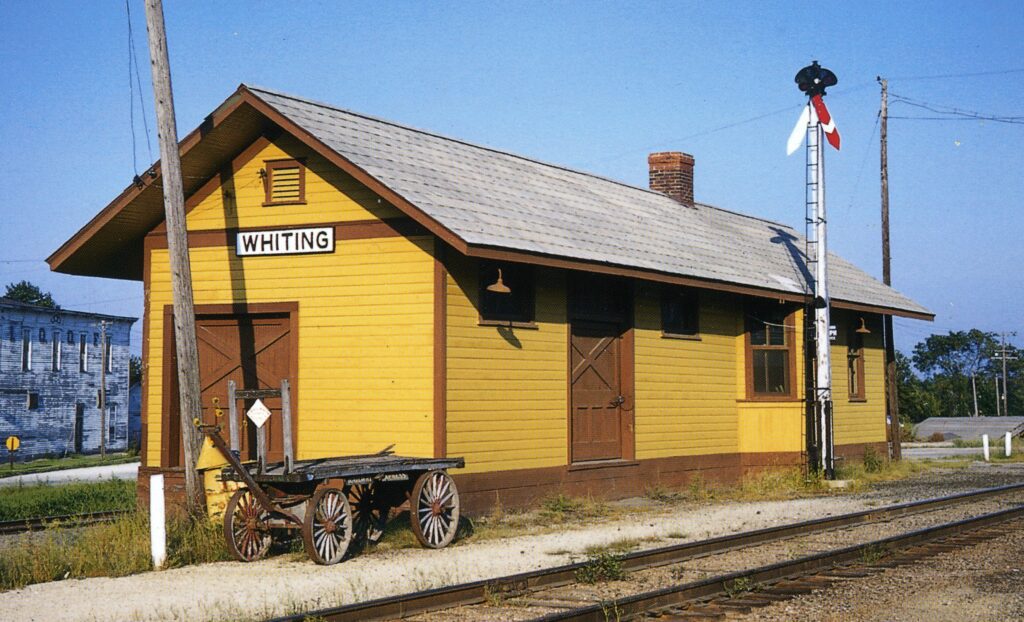
Variations in standards
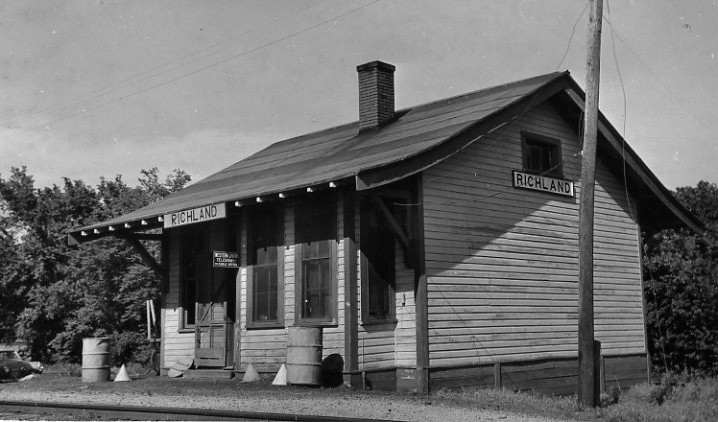
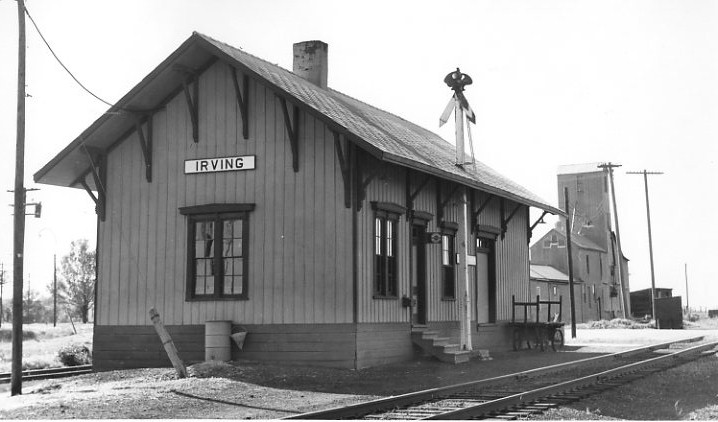
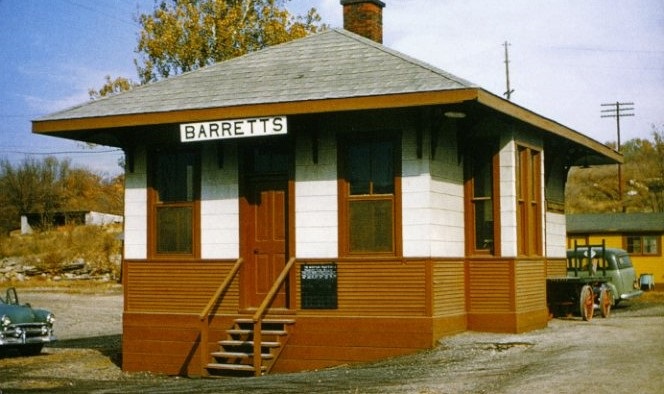
During WWII MP began to applying abestos siding to many depots to eliminate the need for painting. Example shown here was photographed by Jim Ozment in 1954 at Barretts, Missouri.
On the IGN after WWII a white base with Eagle Blue trim was seen on some depots. Bill Ray, MP employee, recalls taking slides of this paint scheme after the Eagles were delivered. No photographic example exist.
Joe Collias recalls in the 1950’s the terminal buildings only being painted red with no trim color. Some water tanks were given a ‘buzz saw’ logo for advertising but this was the exception rather than the rule. Three examples are shown below.
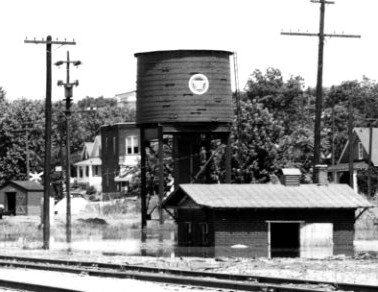
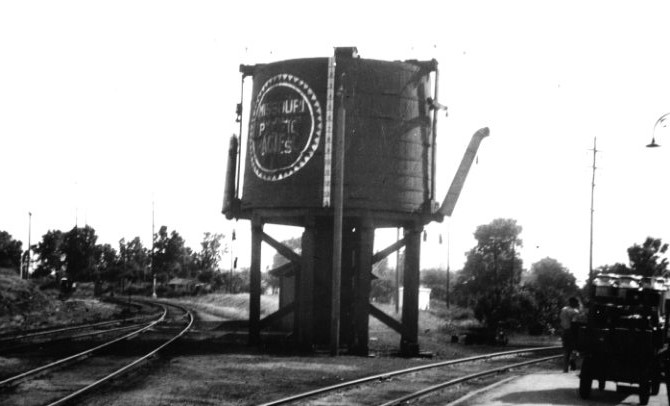
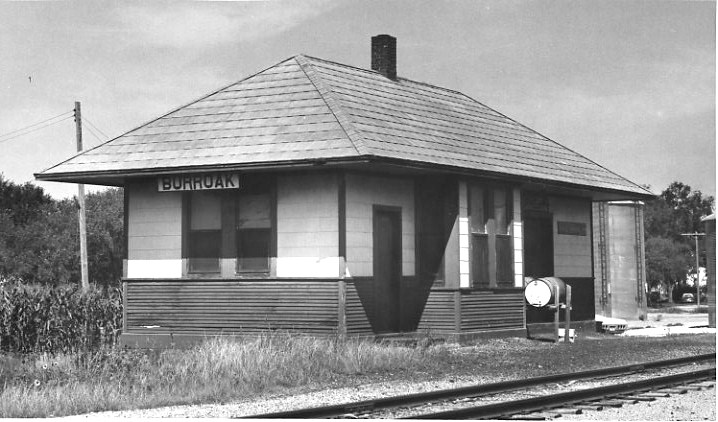
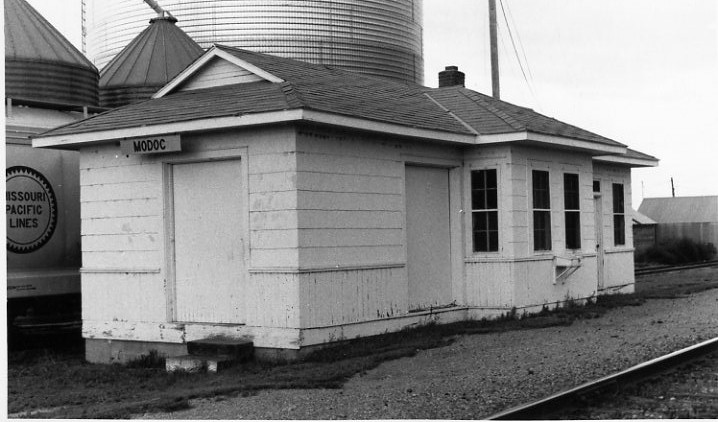
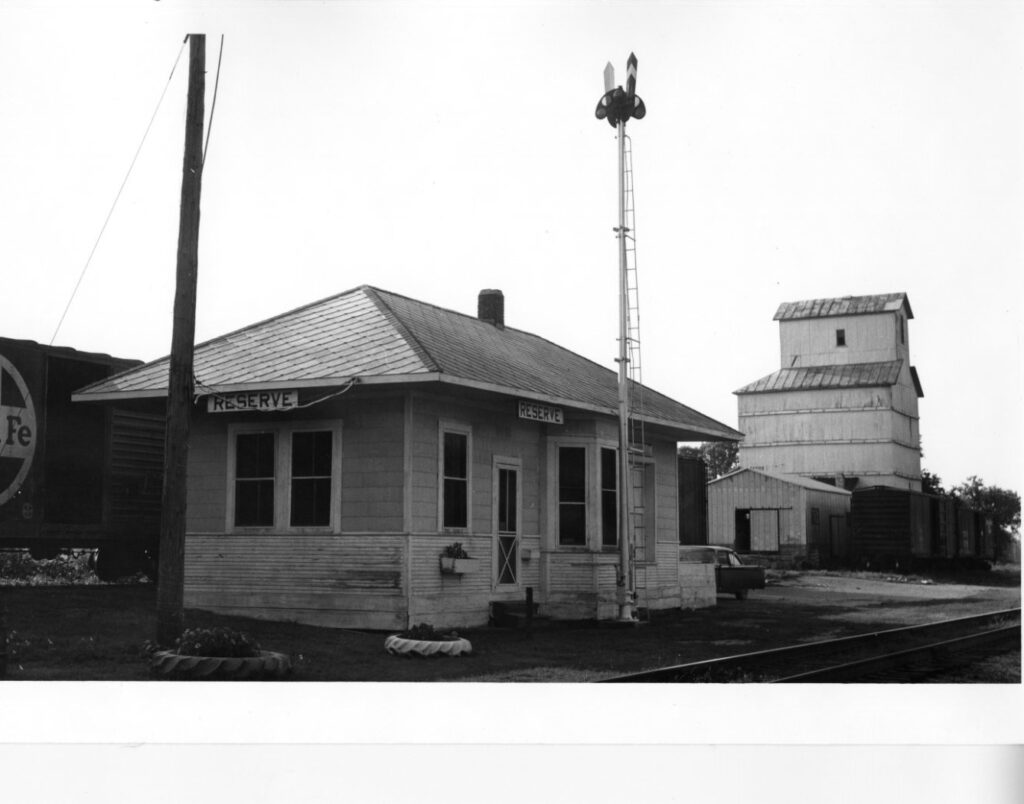
When D. B. Jenks arrived on the Mopac in 1961, he implemented many cost saving measures, one being to eliminate the multicolored structures and paint everything one trim color (brown or white).
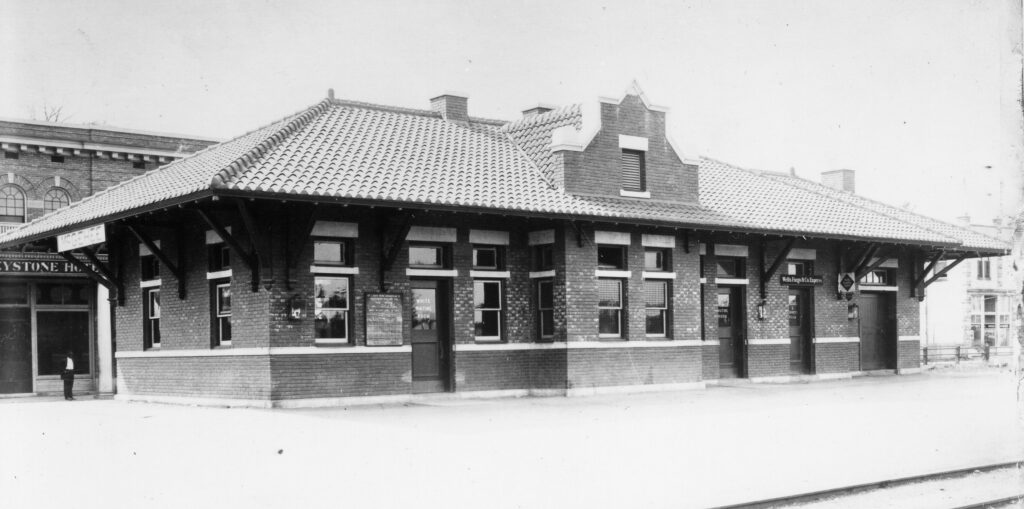
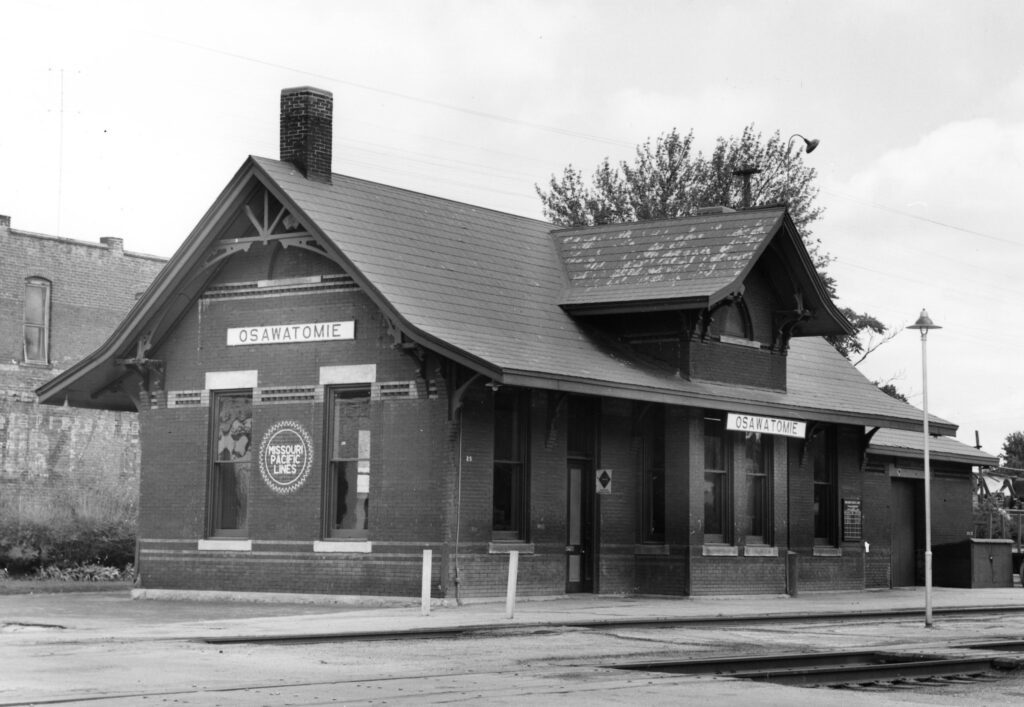
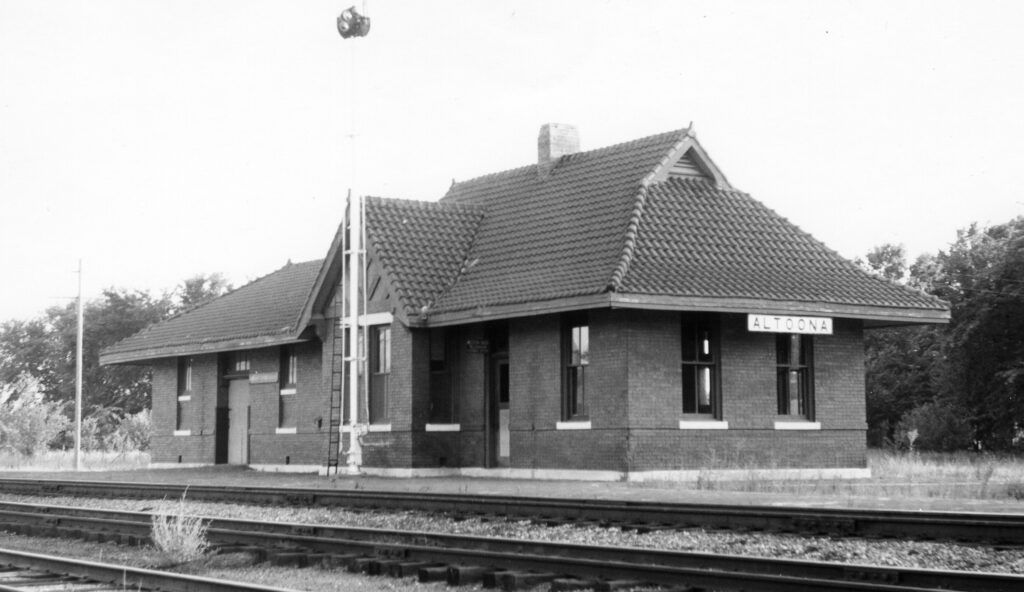
Brick stations
The brick structures followed the same standards as their wood framed counterparts. Shown below are a few examples for the painting standards.

Stone Stations